
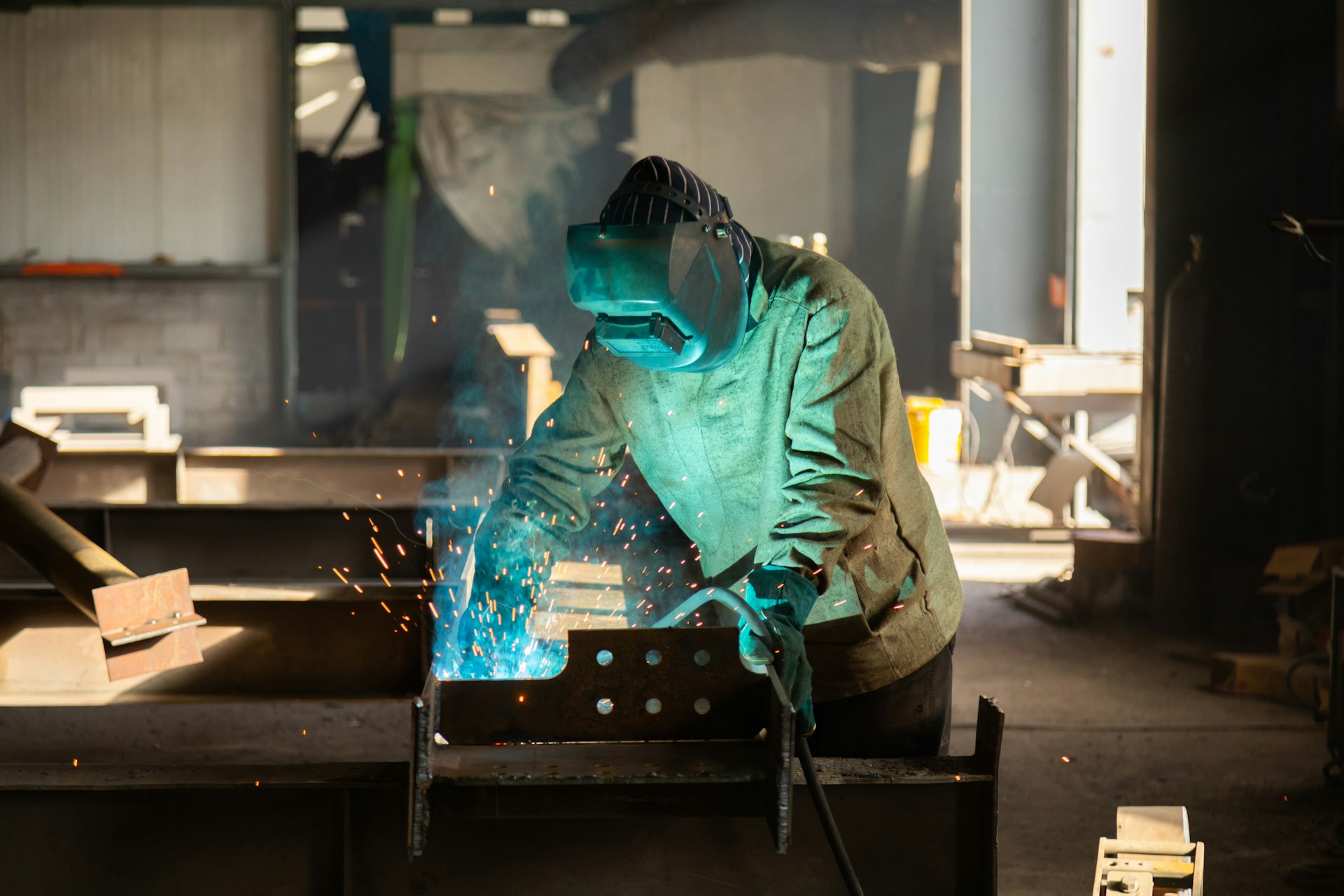
Short answer: Choose mobile welding when the part is installed, too heavy to move, or when downtime costs more than an on-site repair, such as process piping, tanks and plant shutdowns. Choose shop fabrication when the part can move, because the shop offers lower rates, better positioning, fixtures, controlled shielding and full finishing. Many jobs use both: build spools and assemblies in the shop, then make only the closure welds on site.
Every welding job starts with a logistics decision: send the welder to the part, or bring the part to the welder. That choice drives cost, schedule, weld quality and how much of your operation has to stop while the work gets done. Neither option is better across the board. They are good at different things.
This article lays out when mobile welding is the right call, when shop fabrication wins, what changes when TIG welding moves outdoors or into a plant, and how many jobs end up using both.
The basic tradeoff
Mobile welding means a welder and a truck-mounted rig come to your site and weld the part where it sits. Shop fabrication means the part, or the raw material, comes to a fabrication shop, gets built or repaired there, and goes back out finished.
The shop has control. Flat, clean benches, positioners and rotators, fixtures, good light, no wind, shop power and every tool within reach. The field has the part, already installed, already bolted to everything around it, and often already holding up production. Most of the decision comes down to whether the cost and risk of moving the part outweigh the cost and risk of welding it in place.
When mobile welding makes sense
Mobile work is the right answer when moving the part is expensive, slow or impossible. The common cases:
- Installed piping and tube. Process lines, sanitary tube in a food plant, tie-ins to existing systems. Cutting a line out to bring it to a shop usually creates more welds than it saves.
- Heavy or fixed equipment. Tanks, vessels, conveyor frames, structural steel, skids bolted to a foundation.
- Downtime that costs more than the welding. A broken line on a production floor or a cracked bracket on a machine that runs three shifts.
- Oversize parts. Anything that needs a permit, a crane or a lowboy to move.
- Plant shutdowns and turnarounds. The work has to happen on site inside a fixed window.
- Dockside and marine work. Aluminum boat repairs where hauling out and trailering is a bigger job than the repair.
Mobile work usually carries a higher hourly rate and a trip charge, but that comparison misses the point when a crane, a rigging crew and two days of lost production are the alternative.
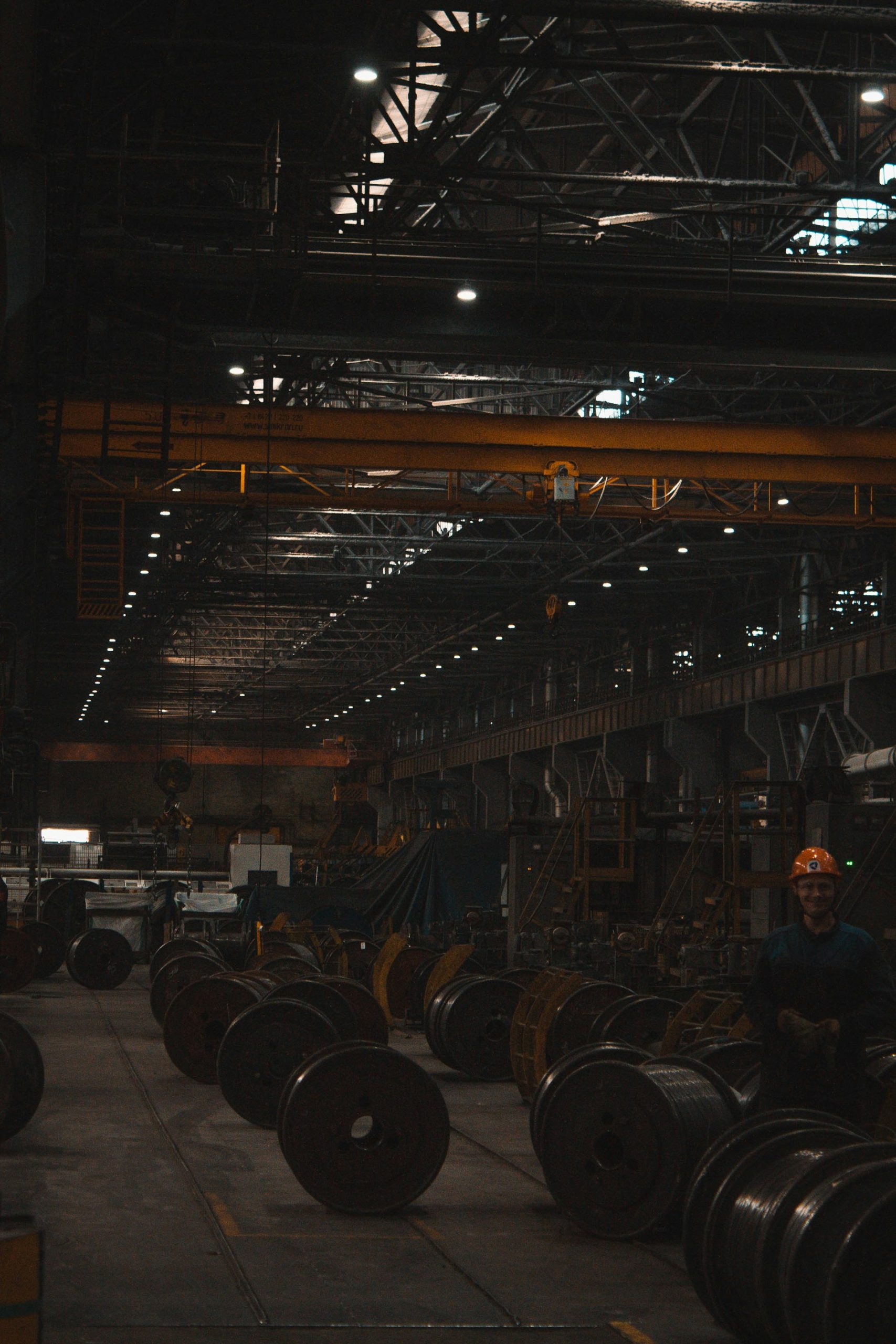
When shop fabrication is the better choice
The shop wins whenever the part can move without much trouble, and whenever weld quality depends on control. A few examples:
- New fabrication. Frames, enclosures, tanks, brackets, rails and prototypes are built faster and more accurately on a table with fixtures.
- Thin stainless and aluminum. Heat control, distortion control and clean shielding are all easier indoors.
- Pipe and tube spools. Rolling a spool on a rotator lets the welder stay in the flat position, and the purge setup is simple.
- Cosmetic and polished work. Railings, architectural stainless and show parts need finishing equipment and a clean environment.
- Removable repair parts. Cracked aluminum castings, pump housings, trailer parts and boat hardware are usually cheaper to pull and bring in.
- Production runs. Repetitive parts justify fixtures, and fixtures only pay off in the shop.
Shop rates are typically lower than mobile rates, and there is no travel on the bill. The weld also tends to be better, because the welder can put the joint in the best position, see it clearly, and take the time to prep it right.
Mobile welding vs shop fabrication side by side
| Factor | Mobile welding | Shop fabrication |
|---|---|---|
| Best for | Installed, heavy or fixed parts; shutdowns; emergency repairs | New builds, removable parts, spools, cosmetic and production work |
| Typical cost per hour | Higher, plus trip or travel charge | Lower, no travel |
| Downtime | Lower, since the part stays in place | Higher if the part has to come out of service |
| Weld position | Wherever the joint is, often overhead or vertical | Usually rotated to flat or horizontal |
| Shielding gas | Exposed to wind; needs screens or enclosures | Still air |
| Back purge | Harder; dams in existing lines | Simpler; small, controlled volumes |
| Fit-up | Limited to how the existing parts sit | Fixtures, clamps and full adjustment |
| Finish work | Limited polishing and passivation on site | Full grinding, polishing and passivation |
| Site requirements | Permits, fire watch, safety orientation | Handled inside the shop |
What changes when TIG welding goes to the field
TIG is the most sensitive of the arc processes to its surroundings, so field TIG work takes more setup than people expect.
Wind and shielding gas
TIG relies on a gentle column of argon, usually 15 to 25 CFH. A light breeze is enough to blow it away and leave porosity or a gray, oxidized bead. AWS D1.1 does not allow gas-shielded welding in a draft unless the weld is sheltered to keep wind at the joint down to 5 mph or less, and most specs follow similar logic. In practice that means welding screens, a tarp enclosure, or a full habitat on exposed jobs. A gas lens and a larger cup help, but they do not replace a windbreak.
Texas heat, humidity and rain
Summer on the Gulf Coast means cold-water lines sweating and steel too hot to touch by midday. Condensation on a part is a porosity source, especially on aluminum, so parts are dried and sometimes warmed before welding. Rain stops outdoor work outright for electrical safety and weld quality.
Power
Field rigs run engine-driven welders. Many of those are DC machines, which handle steel and stainless TIG fine. AC TIG for aluminum needs an AC-capable machine, often an inverter running off the rig’s auxiliary power. Long leads and cable runs up a pipe rack also affect arc starting and remote amperage control, so the rig layout matters.
Fit-up in place
In the shop, if two pieces do not line up, you move one. In the field, existing pipe may be sprung, flanges may be out of alignment, and supports may hold everything in tension. Pulling a joint into alignment against that stress is a common source of later cracking. Good field welders spend real time checking alignment and support before they tack anything.
Purging existing lines
A stainless tie-in on an existing line still needs a back purge, and that is harder in place. The welder may have to feed argon through a drain valve or instrument tap, set inflatable dams on a tether through an open end, and deal with product residue or cleaning chemicals upstream. Lines must be drained and dry. Water standing in a low spot will flash to steam under the arc and wreck the root.
Plant and site requirements
Industrial sites add steps that have nothing to do with the arc, and they take time on the clock:
- Site safety orientation and contractor paperwork before the first day
- Hot work permits, with gas testing around the work area
- Lockout and tagout, plus line breaking only after the line is drained and isolated
- A fire watch during the work and for a set period after. OSHA’s general industry rule sets at least 30 minutes, and many plants follow NFPA 51B, which typically calls for longer.
- Confined space permits for work inside tanks and vessels
- Flame-resistant clothing, H2S monitors at some sites, and a TWIC card at port facilities covered by maritime security rules
Along the Houston Ship Channel and other Gulf Coast industrial areas, these are routine. Building them into the plan up front is what keeps a two-hour repair from turning into a two-day one. Our Houston service area page covers more of that local work.
The hybrid approach: shop-built, field-installed
A lot of good jobs split the work. The welder measures in the field, the parts get built in the shop, and the field crew only makes the welds that cannot be made anywhere else.
Measure first
Shop-built parts for a field install live or die on the measurements. That means taking dimensions off the actual installed equipment, not the original drawings, because plants get modified over the years and nobody updates the prints. Flange bolt orientation, elevation, slope and the true angle of existing pipe all need checking. For tricky connections, a simple plywood or wire template taken off the real thing can save a second trip.
Spools and closure welds
On a piping job, most welds can be made in the shop as spools, rolled on a rotator and purged in a small, controlled volume. The spools go out to site and get installed with a handful of field welds, often with a little extra length left on one end so the last joint can be cut to fit. The result is fewer field welds, better quality on the welds that remain, and a shorter shutdown window.
Pull, repair, reinstall
For repairs, the same idea applies. If a cracked part can be unbolted, it is often faster overall to pull it, bring it to the shop, repair it properly with good access, and reinstall it. Gearbox housings, pump parts, aluminum boat hardware and trailer components all fit this pattern. Our custom metal fabrication shop handles that side, and our mobile TIG welding service covers the installation and in-place work.
How to choose for your project
Work through these in order. The first one that gives a clear answer usually settles it.
- Can the part be removed? If not, the welding is mobile. If yes, keep going.
- What does downtime cost? If pulling the part stops production for longer than an on-site repair would, lean mobile.
- How demanding is the weld? Thin stainless, aluminum, sanitary tube and cosmetic welds lean shop, or at least shop-built with minimal field welds.
- How much welding is there? Large amounts of new work lean shop, because fixtures and positioning save hours.
- What are the site conditions? Wind, weather, access, permits and shift limits all add time to field work.
- How far is the site? Travel adds cost to mobile work, and freight adds cost to shop work. Compare both.
For a closer look at how rates, trip charges and site requirements show up in a price, read how much TIG welding costs in Texas. If you are still unsure, send photos of the part and its surroundings, the material, and what the part does, and we will tell you which way we would handle it. Sometimes the best answer is a little of both. You can start that conversation on our quote request page.
Frequently asked questions
Usually per hour, yes. Mobile welding generally carries a higher hourly rate plus a trip or travel charge, and site requirements like permits and fire watch add time. It can still be cheaper overall when the alternative is cranes, rigging, disassembly or days of lost production. Compare the full cost of each option, not just the hourly rate.
Yes, with protection. TIG relies on a gentle argon shield that a light breeze can blow away, causing porosity and oxidized welds. AWS D1.1 requires gas-shielded welds to be sheltered so wind at the joint stays at 5 mph or less. Field TIG welders use screens, tarps or full enclosures, along with gas lenses, to keep the shielding gas in place.
Clear access to the work area, piping or equipment drained and isolated, with product residue cleaned out, and any permits your site requires. Know where the rig can park and how far the leads must run. Tell the welder about site safety orientation, PPE rules, badging such as TWIC, and shift limits ahead of time so the visit is not spent on paperwork.
Yes. Aluminum TIG on site needs an AC-capable welding machine, clean dry parts and good wind protection, since aluminum is very sensitive to contamination and porosity. Many boat, trailer and equipment repairs are done this way. When the part can be removed easily, though, shop welding usually gives better access, better results and a lower bill.
A closure weld is the final field weld that connects a prefabricated spool to existing piping or to another spool. Spools are often built in the shop with a little extra length on one end, then cut to fit on site so the closure weld lines up properly. Using shop spools keeps field welding to a minimum and shortens shutdowns.