Home / Services / Custom Metal Fabrication
One-offs and short runs
Bring us a drawing, a CAD file or a sketch on the back of a work order. We cut, form, fit and TIG weld one-off parts and short production runs in carbon steel, stainless and aluminum, and we check them against your dimensions before they leave.
Prototypes
Short runs
Steel, stainless, aluminum
Drawing or sketch
Short answer
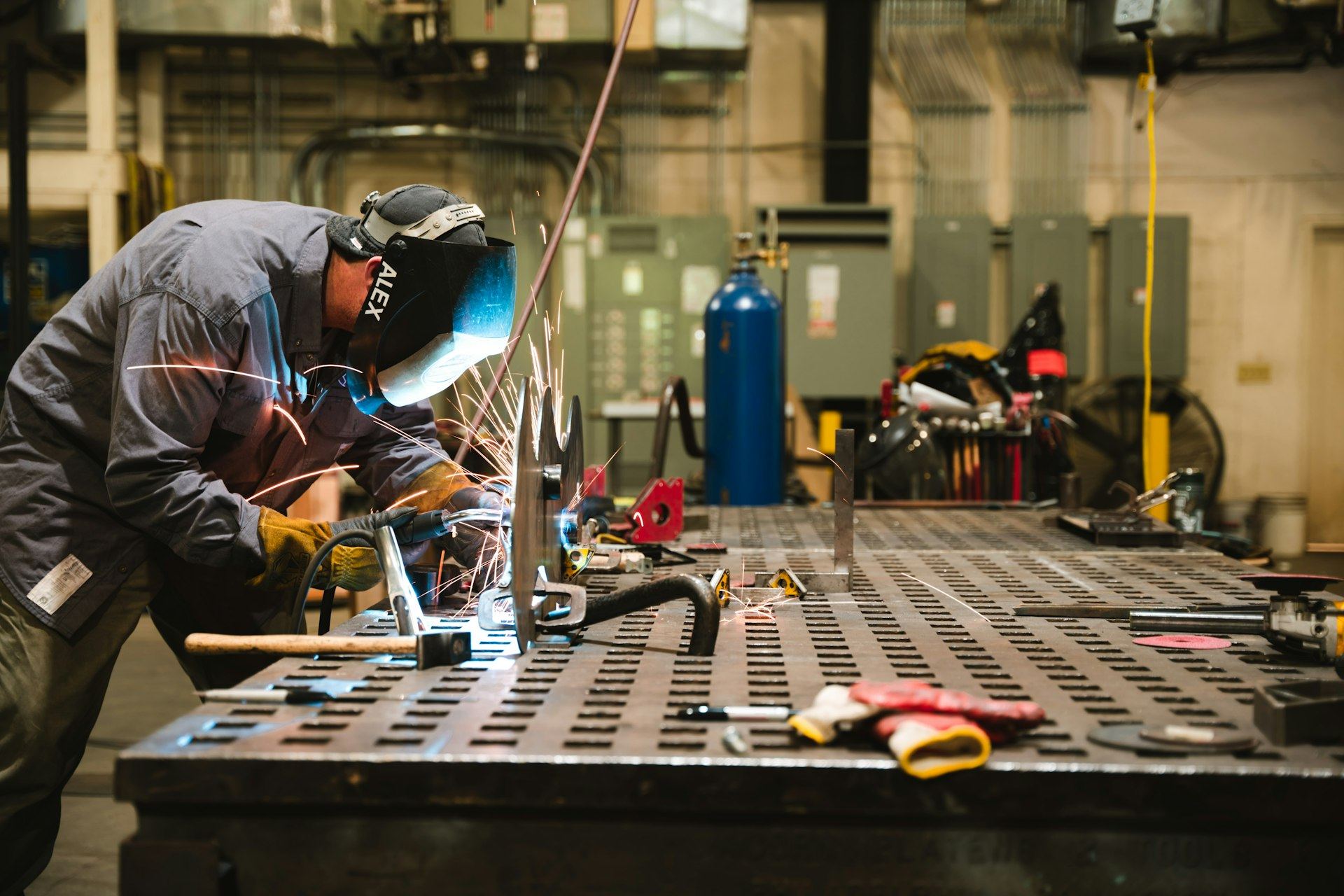
Custom metal fabrication is building a metal part or assembly to a specific design instead of buying it off the shelf. Raw sheet, plate, tube and bar are cut to size, bent or rolled, fitted together and welded, then finished. TIG welding is used when the part needs clean, precise welds, thin material, stainless or aluminum, or a finish that won't need much grinding.
At a glance
Materials
A36 and 1018 steel, 304 / 316L stainless, 5052 / 6061 aluminum, 4130 chromoly tube
Thickness range
About 22 gauge sheet to 1/2 in. plate
Filler metals
ER70S-2, ER308L, ER316L, ER4043, ER5356, matched to the base metal
Files we read
PDF drawings, DXF, DWG, STEP, or dimensioned sketches
Typical codes
AWS D1.1, D1.2, D1.3 and D1.6, when the drawing specifies one
Most fabrication jobs start one of two ways. Either there is a drawing with dimensions, tolerances and a material callout, or there is a problem: a guard that doesn't exist yet, a bracket that keeps breaking, a frame that needs to hold a pump in a space nobody measured. Both are fine. With a drawing, we build to it. Without one, we measure, sketch, check it with you, then build.
The sweet spot is low volume. One prototype, a set of ten brackets, a run of thirty enclosures. Below that kind of volume, a production shop's setup costs don't pay off, and above it, robotic welding starts to make sense.
Installed work is part of it too. A rail or a platform built in the shop often needs a few field welds to tie into the building, and a pump base may need shimming and anchoring once it is set. We plan the split between shop welds and site welds up front, so the parts that go out on the truck are sized to fit through the door they have to pass.
TIG is slower than MIG, so it earns its place on the parts where it shows. Thin sheet that would burn through with wire. Stainless that has to stay clean and corrosion resistant. Aluminum where the bead needs to look like a stack of dimes. Visible welds on an architectural or show piece that would otherwise need hours of grinding. On heavy structural steel with hidden welds, we will tell you MIG or stick is the better value; see TIG vs MIG welding for the tradeoffs.
Carbon steel: A36 plate, 1018 bar, A500 square and rectangular tube
Stainless: 304 and 316L sheet, plate, tube and pipe
Aluminum: 5052 sheet for bending, 6061 plate and extrusions for strength
Chromoly: 4130 tube for frames, roll cages and fixtures
Mixed assemblies, with the right filler at each joint
Cutting comes first, with the method matched to the material and edge quality the part needs. Bends get a test piece when the radius or springback is uncertain; 5052 aluminum forms well, 6061-T6 cracks on tight bends, and stainless springs back more than mild steel. Holes and slots that need to line up with mating parts are laid out from one datum, not measured piece by piece.
Fit-up is where tolerance is won or lost. We tack everything in a fixture or on a flat table, measure diagonals on frames, and check squareness before any full welds go in. Then welding follows a sequence: short welds on alternating sides, back-stepping on long seams, and clamps left on until the part cools. A frame that is square when tacked can pull 1/8 in. out if it is welded all down one side.
Last, the check. Critical dimensions get measured against the drawing, welds get a visual look, and anything structural or pressure-holding can get dye penetrant or a leak test. We note what was checked so you know.
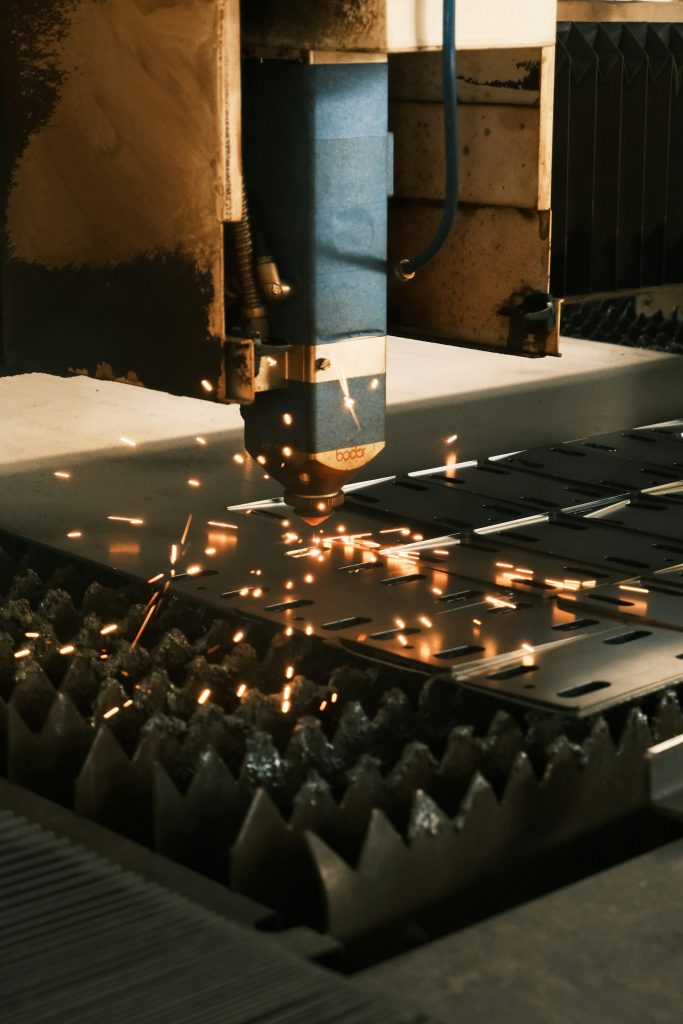
CNC cutting head working a steel sheet with sparks
Tell us how the part will be finished before we weld it, since that changes how we weld it. Powder-coated steel needs smooth welds and no spatter, and closed tube needs a vent hole or it blows out in the curing oven. Anodized aluminum needs 5356 filler for a color match. Stainless can be left with a light tint, brushed to a #4, bead blasted, or pickled and passivated for food contact. Raw steel gets wiped with oil or left for your paint shop.
Weld finish is its own decision. A TIG fillet left as-welded, with even ripples and a narrow straw tint on stainless, is often the best-looking and most corrosion-resistant option, and it costs less than grinding. Ground flush welds make sense on visible flat surfaces and food contact areas, but grinding thins the material and takes time, so we only do it where the drawing or the use calls for it.
Machine guards and safety enclosures. Pump and motor bases. Stainless drip pans, hoppers and chutes for food lines. Electrical enclosures and battery boxes. Small tanks and reservoirs, leak tested. Handrail, guardrail and ladder sections. Brackets, mounts and adapter plates for equipment that never came with the right one. Truck racks, toolboxes and trailer parts. Race car brackets, intake tubes and 4130 chromoly tube frames. Test fixtures and prototypes for product development.
Tanks and enclosures in stainless often lean on our stainless steel TIG welding methods, and aluminum boxes and brackets follow the filler and prep rules on our aluminum TIG welding page.
Have a drawing or a photo of the part?
Text it to us or send it through the quote form. We reply with questions or a written quote.
Welded parts move. Plan on general weldment tolerances around plus or minus 1/16 in. on overall dimensions unless the drawing calls for tighter, and flatness on large thin panels that is good but not machined. When a part needs features held tighter than welding allows, like bearing bores or precision mounting faces, the usual approach is to weld first and machine those features afterward. We can flag that on your drawing before the job starts.
For repeat runs we build a simple fixture on the first part: stops, locating pins and clamps that put every piece in the same spot. That fixture is what makes part thirty match part one, and it can be kept for the next order. If you expect repeat work, say so on the first quote, because it changes whether a fixture is worth building.
We can quote from a napkin sketch, but more detail gets a tighter number. Upload files through the request a quote page.
Drawing or model: PDF, DXF, DWG, STEP, or a dimensioned sketch
Material and thickness for each part
Quantity now, and likely repeat quantities
Finish: raw, painted, powder coat, anodized, brushed or passivated
Tolerances that actually matter, and which ones don't
Delivery or pickup, and the date you need it
How much does custom metal fabrication cost?
It depends mostly on labor hours, not material. Cutting, fitting and welding time, the number of parts, the material, and the finish all drive the price. TIG welding takes longer than MIG, so a TIG-welded part costs more but needs less cleanup. A short run of identical parts costs less per piece than one-offs because fixtures and setup are shared. Send a drawing for a firm number.
Can you build a part from a sketch?
Yes. Many jobs start with a hand sketch and a few measurements. We confirm the dimensions, material and how the part mounts or connects, and may send back a simple drawing for you to approve before cutting metal. If a part is replacing a worn or broken one, sending the old part, or good photos with measurements, helps a lot.
What file types do fabrication shops need?
A PDF drawing with dimensions and material is the most useful single file. DXF or DWG files are best for flat parts that will be cut from sheet or plate. STEP files help with 3D assemblies and bent parts. If you only have a phone photo with measurements written on it, that is often enough for a first quote.
What is the minimum order for custom fabrication?
One. Prototypes and single replacement parts are normal work for a TIG fabrication shop. Small runs from a handful up to a few dozen pieces are also a good fit. For very large production quantities, a shop with robotic welding or stamping will usually beat manual TIG on price, and we will tell you if your job is in that range.
Is TIG or MIG better for fabrication?
It depends on the part. TIG gives cleaner, more precise welds and works better on thin sheet, stainless, aluminum and visible joints. MIG is faster and cheaper on thicker carbon steel where looks don't matter. Many fabricated assemblies would benefit from both. We choose the process for the joint, not the other way around.
Can you fabricate stainless parts for food processing?
Yes. Food equipment is built from 304 or 316L stainless with continuous welds, no crevices, smooth radiused corners where possible, and heat tint removed. Product contact surfaces can be polished and passivated. If the equipment needs to meet 3-A sanitary standards or a plant spec, send it with the drawing so the design and finish match what your inspectors expect.
Stainless steel
304 and 316L stainless TIG welded with full back purge, controlled heat tint and clean, passivated finishes for food, pharma and architecture.
See the service →
Aluminum
AC TIG welding for 5xxx and 6xxx aluminum: boats, trailers, tanks, brackets and castings, with filler picked for strength, color and service.
See the service →
Weld repair
Cracked aluminum and stainless parts, cast aluminum, cast iron and failed welds, repaired after we find out why they broke.
See the service →
Get a quote
Send drawings, photos or a short description. We reply with questions or a written quote.
Request a quote