Home / Services / Aluminum TIG Welding
AC TIG on aluminum
We TIG weld aluminum on AC, from thin 5052 sheet to 6061 plate and old cast housings. The filler is picked for what the part does after it leaves here: hold pressure, carry a load, get anodized or sit in salt water.
AC TIG
5xxx and 6xxx
4043 or 5356
Boats and trailers
Short answer
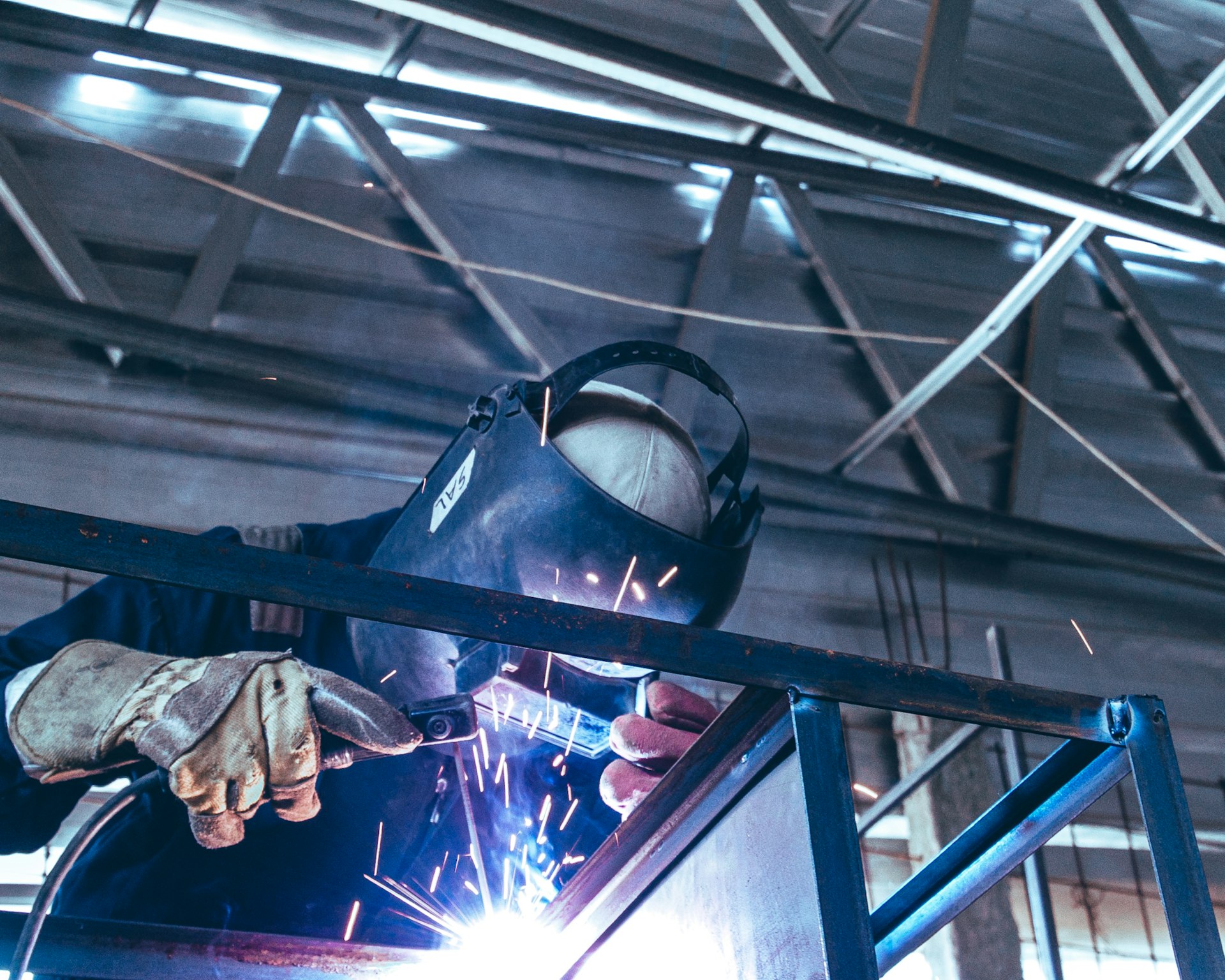
Aluminum is TIG welded with alternating current. The positive half of each cycle breaks up the aluminum oxide skin, which melts near 3,700°F, while the negative half puts heat into the metal, which melts near 1,220°F. The welder adds 4043 or 5356 filler by hand under pure argon. Clean metal, the right filler and steady heat control prevent porosity and cracking.
At a glance
Common alloys
5052, 5083, 5086, 6061, 6063; cast 356 and A356
Filler metals
ER4043, ER5356, ER5183, ER4047 for some castings
Thickness range
About 0.040 in. sheet to 1/2 in. plate (preheat or helium on heavy sections)
Current and gas
AC with adjustable balance and frequency; argon, argon-helium for thick parts
Typical code
AWS D1.2 Structural Welding Code, Aluminum
Aluminum gives no warning. Steel glows red before it melts; aluminum stays silver right up until the puddle drops through. It conducts heat five times faster than steel, so the first inch of a weld needs a lot of amperage and the last inch needs much less. A foot pedal or a pulse setting handles that. A welder who only runs steel usually learns it on your part.
Then there is the oxide. Every aluminum surface carries a thin skin that melts at roughly three times the temperature of the base metal. AC current cracks that skin on the electrode-positive side of the wave. We set the balance so there is just enough cleaning, usually a narrow frosted band beside the bead, without overheating the tungsten.
On an inverter we run 2% lanthanated tungsten with a slightly truncated point, a larger cup and 15 to 20 cfh of argon. Older transformer machines want pure or zirconiated tungsten balled on the end. Both work.
This is the question we get most, and the answer depends on the alloy and the service. 4043 is aluminum-silicon. It flows well, resists hot cracking and is the easier wire on 6061 and castings. 5356 is aluminum-magnesium. It is stronger, especially in shear, and turns a closer color after anodizing. Our aluminum TIG welding guide goes deeper on the chemistry.
One more thing on wire: 4043 welds come out dark gray after anodizing, which bothers some people on a show part and doesn't matter at all on a tank bracket. And 4043 should not go on high-magnesium alloys like 5083 or 5456, because the silicon and magnesium combine into brittle compounds in the weld. If you are unsure which alloy you have, we will pick the filler that is safe for both possibilities or check it before welding.
6061 frames and brackets: 4043 for crack resistance, 5356 for shear strength
5052 and 5086 boat and tank work: 5356
5083 hull plate: 5183 or 5356 for strength
Parts that run above 150°F, like exhaust heat shields or hot-oil tanks: 4043, not 5xxx filler
Cast 356 / A356: 4043, or 4047 for a more fluid puddle
Parts going to anodize: 5356 for a color match
Nearly every porous aluminum weld traces back to dirt. Hydrogen from oil, water or a fingerprint dissolves in the molten metal and comes out as gas bubbles as it freezes. So the routine is boring and it never changes: degrease with acetone, then scrub the joint with a stainless wire brush kept only for aluminum, then weld within a few hours before the oxide grows back. Filler rod gets wiped too, and it stays in a closed tube in a humid Texas shop.
Fit-up wants a small, consistent gap and beveled edges once you are past about 3/16 in. Heavy parts get preheated to around 200°F, kept under 250°F on heat-treated 6061, so the start of the weld fuses instead of rolling a cold bead on top.
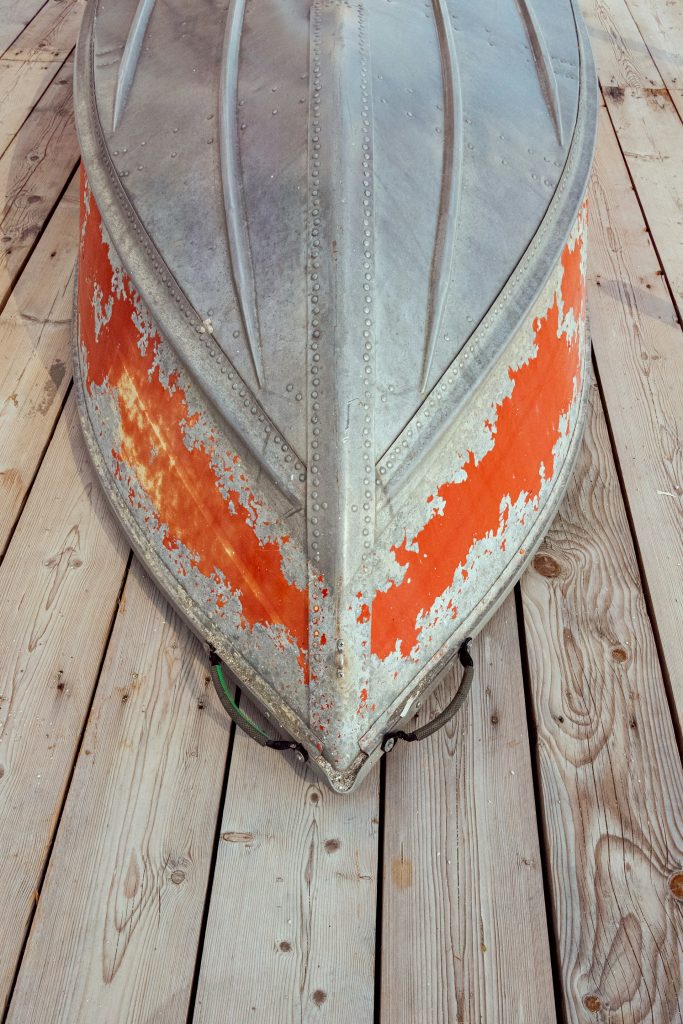
Bow of a weathered aluminum boat hull resting on a wooden dock
Welding 6061-T6 anneals the metal beside the weld. As-welded, that zone drops to about 24 ksi tensile, against roughly 45 ksi for the original T6 plate. AWS D1.2 accounts for this in its design values, and a trailer or a ladder needs to be designed with it in mind. Short of a full re-heat treatment, the strength does not come back.
Aluminum moves more than steel when heated, roughly twice as much. We clamp parts to fixtures, tack heavily, balance welds side to side and skip-weld long seams. On a boat transom or a tank shell, sequence matters more than speed.
Coastal work is a big part of it, from the bays around Corpus Christi up to Galveston. Aluminum jon boats, bay boats and pontoons come in with cracked transoms, worn keel strips, leaking rivet lines and broken T-top legs. Trailer owners bring cracked crossmembers, fenders and tongue repairs. Fuel and water tanks need pressure-tight seams, and we leak test them before they go back.
Shop work includes brackets, battery boxes, intake tubes, intercooler piping, radiator repairs and enclosures. Cast parts like transmission housings and pump bodies are covered on our weld repair page. We do most aluminum in the shop. A boat on a lift or a trailer that can't be towed can be welded where it sits, though wind is harder on argon shielding than people expect.
Have a drawing or a photo of the part?
Text it to us or send it through the quote form. We reply with questions or a written quote.
Visual first: even ripples, good tie-in at the toes, no cracking at the crater, no black soot that points to contamination. Dye penetrant is the standard check for cracks on tanks, castings and structural joints. For tank seams we pressure or soap test at low pressure. If your drawing calls for radiography to AWS D1.2, tell us before we start so the joint prep and the backing suit it.
A good aluminum bead is bright with a clean, frosted cleaning band on each side. Gray, dull beads with a pepper of tiny holes mean the gas was poor or the metal wasn't clean, and those welds get ground out and redone rather than painted over. Crater cracks, the little star at the end of a weld, are the most common defect we see on other people's work. Filling the crater and tapering off the current stops them.
The alloy matters more than people think, so look for stamps or paperwork. If you don't know, say so; we can usually tell 5xxx from 6xxx by where the part came from. Use the quote request form and include:
Alloy and temper if known (6061-T6, 5052-H32)
Thickness at the joint
Photos from a few angles, with the damage or joint visible
Whether the part will be anodized, painted or left bare
Service temperature and what touches it: salt water, fuel, pressure
Whether it can come to us or needs on-site work
Can you weld 6061 aluminum without it cracking?
Yes, with filler. 6061 cracks easily if it is fused without filler, because its silicon and magnesium content falls right in the crack-sensitive range. Adding plenty of 4043 or 5356 dilutes the weld metal out of that range. Filling the crater at the end of each weld and keeping a good bead profile matter just as much as the wire.
Is 4043 or 5356 better for aluminum boat repair?
For most marine hulls in 5052, 5083 or 5086, 5356 is the better choice. It is stronger, matches the magnesium alloys well and holds up in salt water. 4043 is better on castings and on 6061 parts that see heat. Never use 5356 on parts that stay above 150°F for long periods, since high-magnesium filler can become prone to stress corrosion cracking.
Why does my aluminum weld have black soot on it?
Black soot is usually magnesium oxide or contamination. It shows up with 5356 filler, too little gas, a long arc or dirty base metal. A little next to a 5356 bead is normal and wipes off. Heavy soot with porosity means the joint or rod was not clean, the gas coverage was poor or the cup is too small.
Can cast aluminum be TIG welded?
Most cast aluminum can be, but castings are porous and often soaked with oil. We bake the part to drive oil out, grind to clean metal, preheat and weld with 4043 or 4047. Die castings with high zinc or trapped gas bubble badly and sometimes can't be welded well. A photo and the part number help us tell you up front.
How thin can aluminum be TIG welded?
With a modern AC inverter, around 0.040 in. is routine and thinner is possible with tight fit-up and a backing bar. The trouble with thin aluminum is that it goes from not melting to falling through very quickly. Higher AC frequency narrows the arc, and a copper or stainless backing bar keeps the puddle from dropping out.
Does welding weaken aluminum trailer frames?
It weakens the metal right next to the weld. 6061-T6 loses close to half its tensile strength in the heat-affected zone. Factory trailer designs already account for that. Problems come from adding welds in high-stress spots, welding over cracks without removing them, or placing gussets that end abruptly. We look at why the frame cracked before deciding how to repair it.
Weld repair
Cracked aluminum and stainless parts, cast aluminum, cast iron and failed welds, repaired after we find out why they broke.
See the service →
Custom fabrication
One-offs and short runs cut, formed, fitted and TIG welded: brackets, frames, enclosures, tanks, rails and prototypes.
See the service →
Mobile welding
On-site TIG welding for plant shutdowns, installed equipment and repairs that can't come to the shop. Statewide travel, quoted by distance.
See the service →
Get a quote
Send drawings, photos or a short description. We reply with questions or a written quote.
Request a quote